-
 by Christian Amegbor
- September 18, 2026
Ghana’s Cocaine Problem Goes Global: What the Recent International Seizures Mean for the Country
-
By
Christian Amegbor
- September 30, 2026
- in News
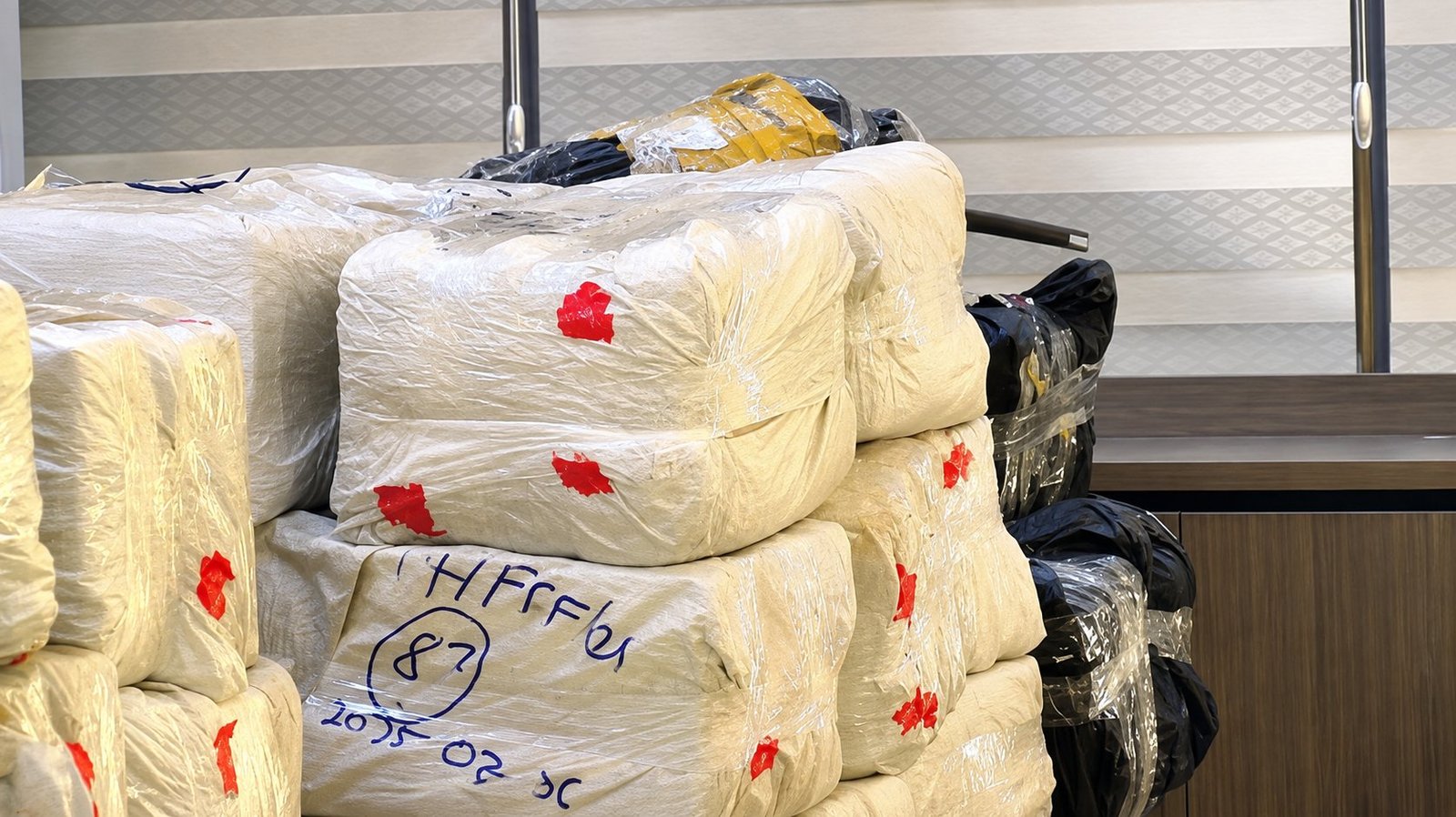
Ghana is facing renewed international attention over cocaine trafficking after a series of major drug cases involving shipments linked to the country.
The latest and most significant case emerged in France, where authorities seized nearly four tonnes of suspected cocaine from a container that had arrived from Ghana. The seizure has since triggered investigations in Ghana and placed fresh attention on the country's ports, border controls and cooperation with international law-enforcement agencies.
But beyond the arrests and the quantity of drugs involved lies a much bigger question: how are international trafficking networks using Ghana's commercial routes, and what does that mean for the country's reputation as a regional trade and transport hub?
French authorities intercepted the container at the port of Dunkirk in September. The shipment reportedly contained almost 3.9 tonnes of suspected cocaine, with an estimated value of about €225 million. The drugs were concealed among plastic waste, according to reports.
The case quickly moved beyond France.
Four Ghanaians have been remanded by an Accra High Court over the alleged exportation of the cocaine. They have pleaded not guilty, and investigations are continuing. A Dutch national identified in court reporting as Jos Leijdekkers, also known as “Bolle Jos”, has also been linked to the investigation and remains wanted.
The allegations will ultimately have to be tested in court.
For Ghana, however, the case raises questions that go well beyond the individuals currently before the courts.
A problem that no longer stops at Ghana's borders
Drug trafficking is an international business.
Cocaine can move through several countries before reaching its final destination, with criminal networks relying on shipping companies, commercial containers, ports, financial systems and sometimes legitimate businesses to move their operations.
That makes it difficult for any single country to deal with the problem on its own.
Ghana's Narcotics Control Commission (NACOC) has repeatedly stressed the need for stronger international cooperation in fighting transnational drug trafficking.
At a September meeting of African drug-law-enforcement agencies in Vienna, NACOC reported 217 arrests and 165 prosecutions, alongside the interception of more than 8.5 tonnes of assorted narcotic drugs and 45.4 million tramadol tablets during the period under review.
The Commission also highlighted intelligence sharing, financial investigations and cooperation with international partners as important parts of its strategy.
The figures demonstrate the scale of enforcement activity, but they also underline the size of the challenge facing Ghana and other countries in the region.
Why Ghana's ports are attracting attention
Ghana is an important commercial gateway in West Africa.
The country's ports handle large volumes of legitimate imports and exports every year, connecting Ghanaian businesses to markets across Africa, Europe and other parts of the world.
That economic activity is essential to the country. But the same infrastructure that allows legitimate trade to move efficiently can also be exploited by criminal networks.
The difficulty for authorities is obvious.
It is not practical to physically open and inspect every container moving through a major port. Doing so would create enormous delays and additional costs for businesses.
Instead, customs and security agencies increasingly depend on intelligence-led screening, identifying suspicious shipments, unusual trade patterns, questionable documentation and links between people or companies.
NACOC operates at Ghana's airports, seaports, border posts and courier facilities. At the ports, its operations include units responsible for maritime monitoring and port control.
The recent French seizure raises questions about whether existing systems are sufficient to identify sophisticated trafficking operations before shipments leave Ghana.
The government is now looking at the wider system
The government has responded by ordering a broader review of Ghana's anti-drug enforcement system.
President John Mahama directed the formation of an inter-agency task force to develop a national roadmap for preventing drug trafficking through Ghana's borders.
The task force was instructed to examine the country's border-security arrangements and identify weaknesses that criminal networks could exploit.
That is significant because stopping cocaine trafficking is not simply about finding drugs hidden inside a container.
Authorities also have to understand who arranged the shipment, who financed it, who provided the documentation, who handled the cargo, and where the money eventually goes.
In other words, the investigation has to follow the network, not just the package.
The money may tell the bigger story
Large-scale cocaine trafficking requires considerable organisation and financing.
The person physically handling a shipment may be only one small part of a much larger operation.
That is why financial investigations have become increasingly important in international drug enforcement.
If investigators can trace payments, assets and financial relationships, they may be able to identify people operating behind the scenes rather than focusing only on couriers or intermediaries.
NACOC has indicated that financial investigations form part of its wider enforcement approach, alongside intelligence gathering and international cooperation.
This could prove important in Ghana's ongoing cases.
A successful investigation should ideally answer more than the question of who transported the drugs. It should establish how the operation was organised, who benefited from it, and whether the same network has been involved in other shipments.
What does this mean for Ghana's international reputation?
This is perhaps the most difficult question for Ghana.
A cocaine shipment linked to Ghana does not automatically mean that Ghanaian authorities were involved in trafficking, nor does it establish that the drugs originated in Ghana.
Those are matters for investigators and the courts.
But repeated cases involving shipments connected to Ghana can still attract international scrutiny.
Foreign customs authorities may pay closer attention to cargo leaving Ghana. Businesses could face additional compliance checks, while shipping and logistics companies may come under greater pressure to demonstrate that their supply chains are secure.
There is therefore a legitimate economic concern.
Ghana needs international confidence in its ports, businesses and commercial systems. Any perception that criminal networks can easily exploit those systems could create difficulties for legitimate traders as well.
That is why the country's response matters.
Cooperation will be critical
The international nature of cocaine trafficking means Ghana cannot tackle the problem alone.
Information gathered by French customs officers can be useful to Ghanaian investigators. Intelligence collected in Ghana can help authorities in another country identify a wider network.
NACOC has pointed to cooperation with other African countries and international agencies as part of its efforts to combat organised drug trafficking.
This type of cooperation becomes even more important when suspects, money, companies and shipments are spread across different jurisdictions.
Criminal networks do not operate according to national boundaries.
Law-enforcement agencies therefore have to share information just as quickly.
Ghana's challenge goes beyond one cocaine seizure
The recent cases should not be viewed simply as isolated drug busts.
They raise broader questions about Ghana's ability to protect its ports and borders while maintaining the efficiency needed for international trade.
The government will need to balance stronger security with the need to avoid unnecessary disruption to legitimate businesses.
That means investing in intelligence-led inspections, improving coordination between agencies, strengthening financial investigations and maintaining close relationships with international partners.
There is also a need to ensure that investigations are allowed to run their course without prejudging the people accused.
The four Ghanaians currently before the court have pleaded not guilty. Their alleged involvement remains a matter for the judicial process to determine.
For Ghana, the bigger issue is what authorities learn from the case.
If criminal networks have identified weaknesses in the country's commercial and security systems, those weaknesses need to be addressed.
If international partners have information that can help Ghana identify the wider network, that information needs to be shared.
And if legitimate businesses are being used without their knowledge, stronger screening and compliance systems may be necessary to protect them.
The road ahead
The latest cocaine cases have put Ghana back under an international spotlight.
But the story is bigger than the quantity of drugs seized or the people currently facing charges.
It is about whether Ghana can protect its growing role in international trade from criminal networks seeking to exploit the same connections that support legitimate commerce.
The country has an opportunity to respond not only by making arrests, but by strengthening the systems behind the arrests, from port security and intelligence sharing to financial investigations and international cooperation.
For Em News, the central question is therefore not simply how much cocaine was seized.
It is whether Ghana can make its borders, ports and financial systems increasingly difficult for international trafficking networks to exploit while protecting the legitimate businesses and trade that depend on them.
That is the challenge now facing Ghana as the latest investigations continue.
Please Login to comment in the post!

you may also like


-
by Christian Amegbor
- September 18, 2026
Rev. Francis Lawer Sackitey Launches Memoir o...
-
by Christian Amegbor
- September 19, 2026
Global Evangelicals Church Holds Kasoa Zone D...
-
by Christian Amegbor
- September 19, 2026
GES Warns SHSs Against Turning Away Students...

-
by Christian Amegbor
- September 19, 2026