-
 by Christian Amegbor
- September 18, 2026
Government Launches First Phase of Major Tomato Production Drive
-
By
Christian Amegbor
- September 19, 2026
- in Business
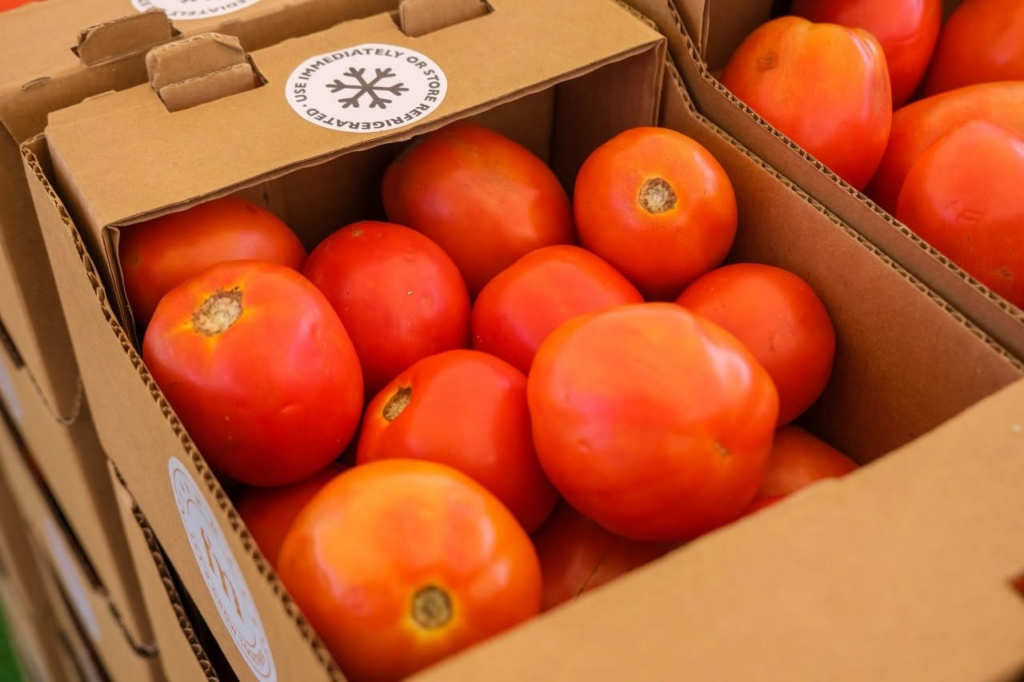
The government has launched the first phase of a major tomato production programme aimed at increasing local output and reducing Ghana’s heavy dependence on imported tomatoes and tomato products.
The initiative, known as the Ghana Tomato Self-Sufficiency Initiative (GHATSI), was launched in the Volta Region on September 17 by the Minister for Food and Agriculture, Eric Opoku, in partnership with FarmMate Limited.
The programme is part of efforts to build a stronger domestic tomato industry while creating better opportunities for farmers and reducing the amount of foreign exchange spent on tomato imports.
First phase targets 100,000 tonnes
The first phase, covering the 2026/27 production season, is targeting approximately 100,000 tonnes of tomatoes from more than 10,000 acres of farmland.
The initiative will be implemented across several districts and regions, with production planned in different parts of the country to help ensure a more consistent supply throughout the year.
Ghana currently produces an estimated 510,000 tonnes of tomatoes annually, while national demand is around 805,000 tonnes, leaving a significant supply gap.
The Ministry has also identified post-harvest losses as a major challenge, with about 30% of locally produced tomatoes estimated to be lost before reaching consumers.
Government wants to tackle seasonal shortages
For years, Ghana's tomato market has been affected by periods of shortage and surplus. The government says the new programme is designed to address that problem by coordinating production, irrigation, financing, processing and access to markets.
Under the initiative, tomato production will be staggered across different agricultural zones so that harvesting can take place at different times of the year.
This approach is expected to reduce the sharp seasonal fluctuations that often push up prices during periods when local supply is low.
Farmers to receive support
The programme is also expected to provide participating farmers with support beyond access to farmland.
The broader initiative links farmers to inputs, irrigation, financing, crop insurance, technical support, aggregation and guaranteed markets.
Under the farmer support package, participating growers are expected to receive financed agricultural inputs, irrigation assistance, extension services and multi-peril crop insurance. Repayment is expected to be settled through the sale of produce at the point of offtake.
The government believes this structure will help reduce some of the financial and production risks that discourage farmers from investing heavily in tomato cultivation.
Bigger production target ahead
The first phase is only the beginning of the government's broader plan.
When fully implemented, GHATSI aims to increase Ghana's annual tomato production to about 400,000 tonnes from more than 40,000 acres of farmland.
The programme is also projected to create hundreds of thousands of jobs across the tomato value chain, including farming, irrigation, aggregation, transportation, storage, processing, distribution and retail.
Part of the long-term plan is to expand tomato processing so that more locally produced tomatoes can be turned into puree and other value-added products.
Government and private sector partnership
The Ministry of Food and Agriculture says the partnership with FarmMate is intended to bring government resources and private-sector expertise together to address some of the longstanding challenges facing tomato farmers.
The Volta Region is hosting the first phase, with stakeholders expected to use the experience to strengthen and expand the programme as it progresses.
The government hopes the initiative will not only increase tomato production but also improve farmer incomes, reduce post-harvest losses and create a more reliable supply of locally produced tomatoes.
If successfully expanded, the programme could also reduce Ghana's dependence on imported tomatoes and tomato paste while giving farmers a more predictable market for their produce.
Please Login to comment in the post!

you may also like


-
by Christian Amegbor
- September 19, 2026
Secured Credit Hits GH¢31.5bn in Q2 2026 as L...

-
by Christian Amegbor
- September 19, 2026
MTN Ghana Steps Up Push to Take Digital Payme...
-
by Christian Amegbor
- September 20, 2026
How Much Does It Really Cost to Run a Small B...

-
by Christian Amegbor
- September 20, 2026