-
 by Christian Amegbor
- September 18, 2026
How Much Does It Really Cost to Run a Small Business in Ghana in 2026?
-
By
Christian Amegbor
- September 20, 2026
- in Business
How Much Does It Really Cost to Run a Small Business in Ghana in 2026?
By Em News
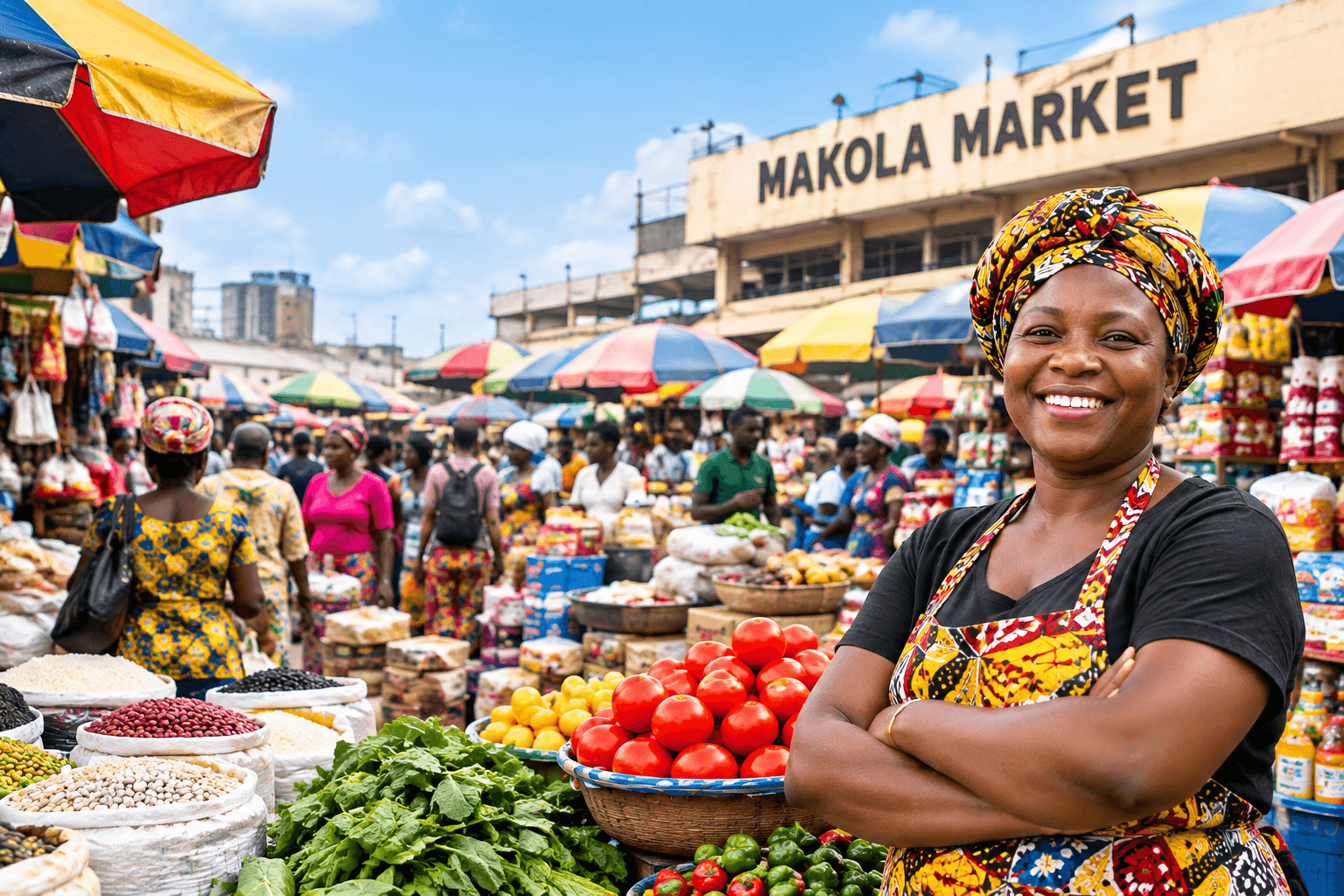
Ask any trader in Makola how business is going, and the answer rarely starts with sales. It starts with costs, rent that climbed again in January, an electricity bill that no longer matches last year's, transport fares that eat into the morning's profit before a single item is sold.
Ghana's headline inflation eased to 5.0 percent in August 2026, but that single number hides a sharper story. Non-food inflation, the category that covers rent, electricity, transport and services, rose to 6.8 percent and now accounts for roughly 71 percent of the country's total inflation. Housing, water and energy alone carried inflation of about 10.2 percent; transport inflation stood at 10.5 percent. For the ordinary trader, this is the gap between what the Ghana Statistical Service reports and what actually happens at the till.
Em News spoke with small business owners across Accra: a provisions trader, an electronics dealer, a seamstress, a chop bar owner and a hardware supplier, to break down, line by line, what it costs to keep a small business open in Ghana this year.
Rent is the first bill of the month, and the hardest to negotiate
For most traders, rent is not one payment but two: the stall or shop itself, and, increasingly, "goodwill" or renewal fees landlords attach when a lease comes up. A single room shop in a mid-tier Accra market such as Madina or Kaneshie now rents for between GH₵800 and GH₵2,500 a month, depending on foot traffic and proximity to the main road. Container shops on rented land, common among electronics and phone accessory dealers, run cheaper, often GH₵400 to GH₵1,000, but carry less protection; several traders described landlords revising rent mid-lease when land values in an area rise.
A Kasoa-based provisions trader interviewed for this piece put it simply: rent used to be the cost you planned around once a year. Now it is the cost that moves the most unpredictably, because landlords are themselves passing on higher costs of construction materials and land.
Electricity is the bill that has risen twice in one year
Electricity has been the single most visible cost increase of 2026. The Public Utilities Regulatory Commission approved a 9.86 percent average tariff increase effective January 1, under its new 2026–2030 Multi-Year Tariff Order, and followed that with a further 3.49 percent increase for the third quarter, effective July 1. Combined, that is a rise of well over 13 percent within a single year, driven by the cedi-dollar exchange rate, inflation, and the cost of natural gas used in thermal generation.
For a small shop running a fridge, a few lights, and a phone-charging point, this typically means a monthly bill of GH₵150 to GH₵400 on prepayment, though traders running deep freezers, a near-universal fixture for chop bar owners and drink sellers, report bills closer to GH₵600 to GH₵1,000, especially during the dry season when outages force some to keep freezers running longer to compensate for lost hours. A chop bar owner in Tema described electricity as now rivaling stock as her second-largest monthly cost, a shift she said happened gradually over the past two years rather than overnight.
Transport fuel prices and trotro fares squeeze both goods and people
Transport inflation of 10.5 percent in August reflects a cost that hits small businesses twice: once in the price of moving stock from suppliers or ports, and again in the daily commute of the trader and any staff. A trader who restocks weekly from Kantamanto or Makola can expect to pay GH₵50 to GH₵150 per trip in trotro or shared-taxi fares for goods alone, before accounting for their own transport. For traders further from major markets like Kasoa, Tema, and the outskirts of Accra, that figure climbs, since it usually means two or three fare stages rather than one.
An electronics dealer working out of Circle noted that fuel-linked cost pressure shows up indirectly too: delivery riders and drivers he hires to move stock have raised their rates twice this year, each time citing fuel prices rather than distance.
Wages paying staff above the legal floor, but still below a living wage
Ghana's national daily minimum wage rose 9 percent in 2026, from GH₵19.97 to GH₵21.77, effective January 1. A monthly equivalent of roughly GH₵520 to GH₵650, depending on how working days are counted. In practice, most small business owners interviewed pay above this floor for anyone beyond an apprentice, since the statutory minimum applies most directly to agriculture, construction day-labour and the smallest informal enterprises.
A seamstress running a small shop in Kumasi with two assistants said she pays each GH₵500 to GH₵700 a month plus lunch, a figure she considers fair locally but well short of what her assistants would need to live independently in the city. The pattern repeated across the traders interviewed: wages are almost always the most flexible line in the budget, the one adjusted first when a month is slow, and the one owners feel most conflicted about cutting.
Data and connectivity: a small line item that adds up
Mobile data has become non-negotiable for small businesses that now take Mobile Money payments, post to WhatsApp Business or Facebook Marketplace, or simply need to stay reachable to suppliers and customers. The National Communications Authority's own market surveillance put the average cost of 1GB of data in Ghana at just over GH₵6, though prices have moved since telecom operators revised bundle values through 2025 and 2026. Traders typically spend GH₵50 to GH₵150 a month on data across one or two lines, modest next to rent or electricity, but a cost that did not exist for most small businesses a decade ago and is now considered as essential as a shop sign.
Stock and inventory: the cost that dictates everything else
Stock remains the largest single outlay for almost every trader, and the one most exposed to the cedi's movement against the dollar, since a large share of Ghana's retail and wholesale goods, from provisions to electronics to fabric, are imported or priced against imported inputs. A provisions trader restocking weekly might commit GH₵3,000 to GH₵8,000 depending on scale; a hardware dealer in Kasoa described monthly restocking costs of GH₵15,000 or more for cement, roofing sheets and fittings, a figure that leaves little room for absorbing a bad month.
What traders described consistently was not the size of the stock bill itself but its unpredictability; a supplier's price can shift between one restocking trip and the next, driven by exchange-rate movement rather than anything happening in the trader's own shop.
What it adds up to
Put together, a small shop or trading operation in Accra, one owner, one or two staff, a modest retail footprint, is now realistically looking at fixed and semi-fixed monthly costs (rent, electricity, wages, data, transport) of roughly GH₵2,500 to GH₵5,000, before a single cedi is spent on stock. Add stock replenishment, and total monthly outlay for a functioning small business commonly runs into five figures.
Set against that is an economy where inflation has cooled on paper, but non-food costs, the ones small businesses cannot avoid, continue to rise faster than the headline number suggests. The traders interviewed for this piece did not describe a crisis so much as a constant recalibration: renegotiating rent, shortening the gap between restocking trips, adjusting what they can pay staff, and treating every utility bill as a number that might be different again next quarter.
For Ghana's small business owners, that recalibration is not a seasonal exercise. In 2026, it has become the job itself.
Please Login to comment in the post!

you may also like


-
by Christian Amegbor
- September 19, 2026
Government Launches First Phase of Major Toma...

-
by Christian Amegbor
- September 19, 2026
Secured Credit Hits GH¢31.5bn in Q2 2026 as L...

-
by Christian Amegbor
- September 19, 2026
MTN Ghana Steps Up Push to Take Digital Payme...

-
by Christian Amegbor
- September 20, 2026