-
 by Christian Amegbor
- September 18, 2026
Ayalolo Contra-Flow Begins as Government Moves to Ease Accra Traffic
-
By
Christian Amegbor
- September 29, 2026
- in Business
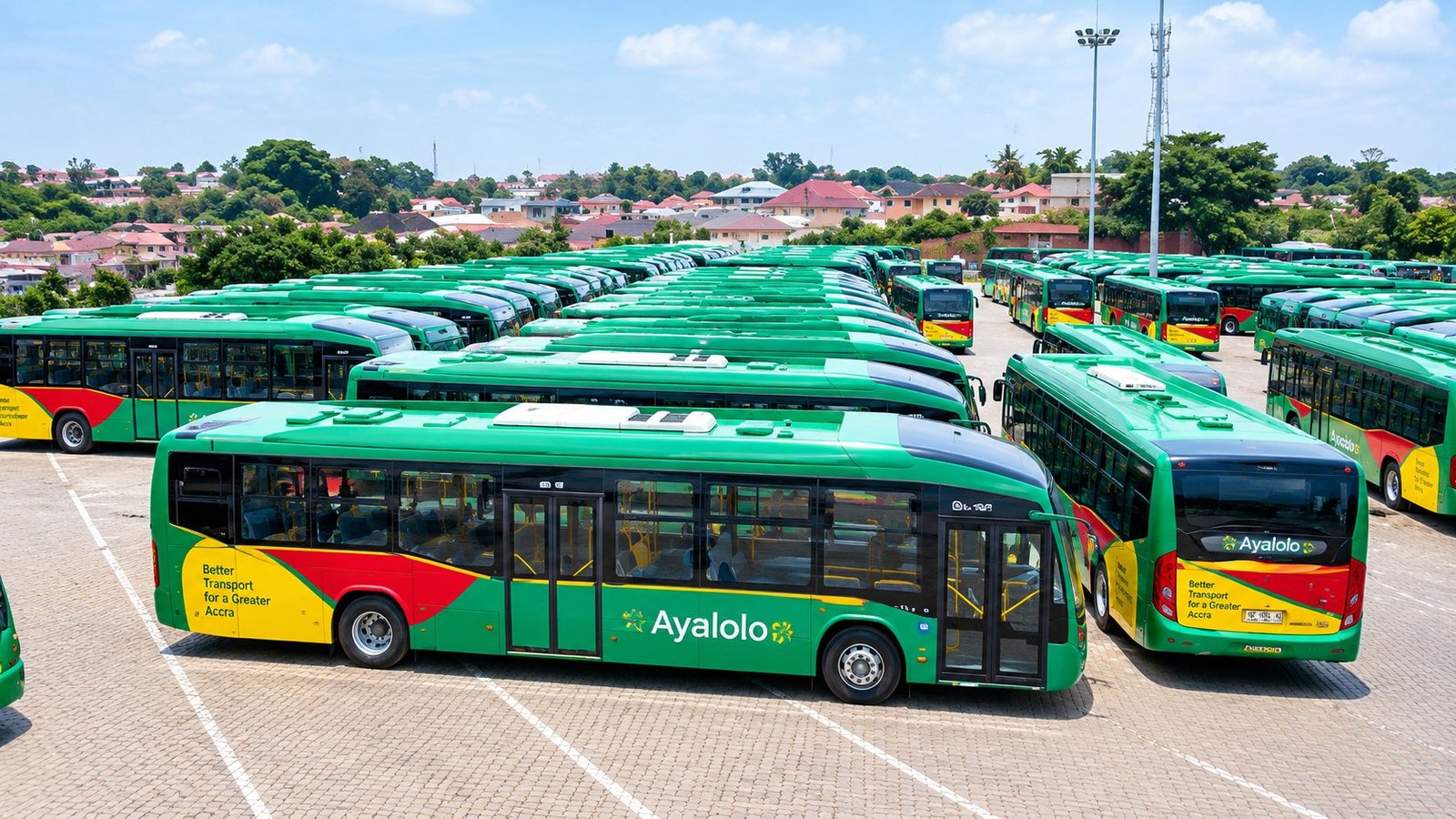
Accra has begun a new experiment in public transport management as the government introduces a contra-flow system for Ayalolo buses on some of the capital’s busiest commuter routes.
The arrangement, which started Tuesday, September 29, is intended to help Ayalolo buses move through heavy peak-hour traffic more quickly and make public transport a more predictable option for people travelling into Accra’s Central Business District.
The initiative initially covers the Amasaman–Accra, Adenta–Accra and Kasoa–Accra corridors, with the latest implementation update also identifying Pokuase–Accra among the routes being served.
The system operates during the periods when traffic pressure is normally at its highest — 6:00am to 9:00am in the morning and 4:00pm to 8:00pm in the evening.
During those hours, selected sections of the roads are temporarily reconfigured to give authorised Ayalolo buses a dedicated path in the direction of heavier commuter movement.
How the contra-flow system works
The idea is relatively simple.
Instead of allowing Ayalolo buses to remain trapped in the same congestion as other vehicles, designated sections of road will temporarily give the buses priority movement.
The contra-flow lanes are reserved for Ayalolo buses. Private cars, taxis, trotros and other unauthorised vehicles are not permitted to use them.
The Motor Traffic and Transport Department of the Ghana Police Service is supporting the programme by deploying officers at strategic points and major intersections to manage traffic and enforce the arrangement. The Department of Urban Roads and the Greater Accra Passenger Transport Executive are also involved in the implementation.
For motorists, that means paying closer attention to road markings, signs and instructions from traffic officers, particularly during the morning and evening peak periods.
Why the government is making the change
One of the biggest challenges facing Ayalolo has been the same problem affecting most road users in Accra: traffic.
A bus designed to provide mass transportation can lose much of its advantage when it spends a large part of its journey sitting in congestion.
The government is therefore trying to address the problem by giving Ayalolo a clearer route through some of the most heavily congested sections of the city.
According to the government, the objective is to reduce journey times, improve punctuality and make the service more reliable for commuters. Authorities also hope that a stronger mass-transit system will encourage some people who currently drive private cars into Accra to consider using public transport instead.
That could have an impact beyond the buses themselves.
Every private car that is replaced by a bus passenger represents one fewer vehicle competing for limited road space. If enough commuters make that switch, the pressure on major roads could eventually be reduced.
Fixed schedules could be just as important
The success of the programme will not depend only on how quickly the buses move.
For commuters, knowing when a bus will leave can be just as important as knowing how quickly it will travel.
Local Government, Chieftaincy and Religious Affairs Minister Mahama Ayariga has said Ayalolo buses will operate according to fixed schedules during peak periods, even when there are few passengers.
The intention is to make the service predictable enough for people to plan their journeys around it rather than waiting indefinitely for a bus to fill up.
That is an important change in the way public transport is experienced.
A commuter who knows that a bus will leave at a particular time can plan when to leave home, when to arrive at work and when to begin the journey back. Reliability can therefore become as valuable as speed.
What happens to trotros?
The expansion of Ayalolo also raises questions about the future of commercial transport operators, particularly trotro businesses that serve many of the same commuters.
The government, however, says the intention is not to push trotros out of business.
Ayariga has argued that the main target is private car users who currently drive into Accra because they consider existing public transport options too slow or unpredictable. He believes a faster and more reliable Ayalolo service could persuade some of those motorists to switch to buses.
Whether that happens will depend largely on the quality of the service.
Commuters are unlikely to abandon their usual transport arrangements simply because a new traffic system has been introduced. They will need to see shorter journey times, dependable schedules, reasonable fares and a service they can rely on consistently.
The real test begins on the road
For now, the government's plan is being put to its first major practical test.
Managing a contra-flow system on some of Accra's busiest roads will require careful coordination. A single vehicle entering a restricted lane or a poorly managed intersection could create safety problems or undermine the purpose of the arrangement.
That is why enforcement will be critical.
Traffic officers will have to ensure that the dedicated lanes remain clear, while motorists and commercial transport operators will need to follow the temporary traffic arrangements.
The government has appealed to motorists, pedestrians, businesses and residents along the affected routes to cooperate with the authorities.
For commuters, however, the measure will ultimately be judged by something much simpler: time.
If Ayalolo buses can consistently move through congested areas faster and get passengers to their destinations more predictably, the system could give public transport in Accra a much-needed boost.
If that reliability is not sustained, commuters may quickly return to the transport options they already know.
The contra-flow system has now begun. The coming weeks will show whether giving Ayalolo more road space can translate into shorter journeys and a more dependable public transport experience for Accra's daily commuters.
Please Login to comment in the post!

you may also like


-
by Christian Amegbor
- September 19, 2026
Government Launches First Phase of Major Toma...

-
by Christian Amegbor
- September 19, 2026
Secured Credit Hits GH¢31.5bn in Q2 2026 as L...

-
by Christian Amegbor
- September 19, 2026
MTN Ghana Steps Up Push to Take Digital Payme...

-
by Christian Amegbor
- September 20, 2026