-
 by Christian Amegbor
- September 18, 2026
GH¢50 Billion and Counting: What Has Ghana's "Big Push" Actually Delivered?
-
By
Christian Amegbor
- September 22, 2026
- in Business
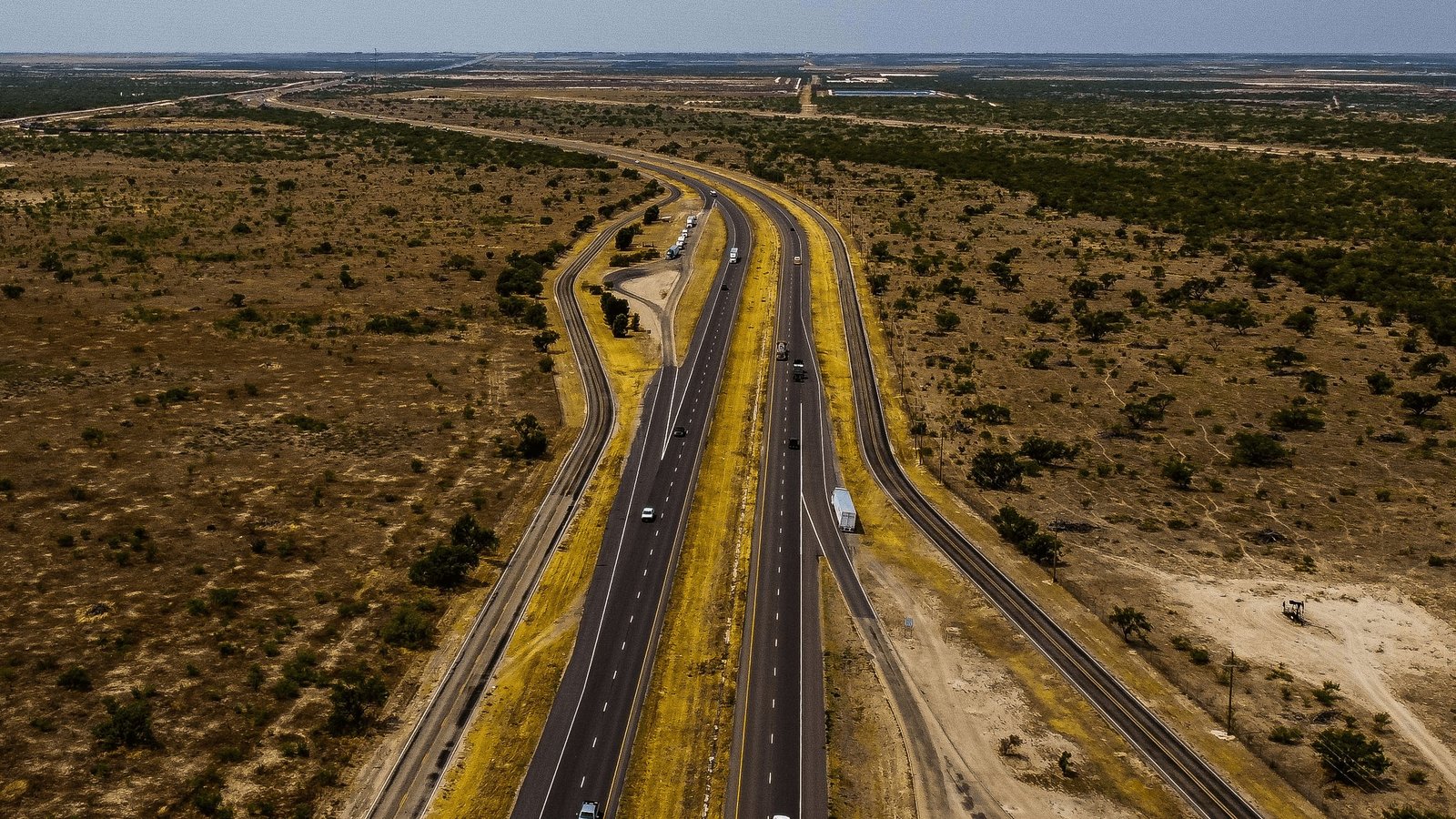
Numbers this large are hard to hold in your head. GH¢50 billion, announced at February's State of the Nation Address. GH¢73 billion, cited a month later in a parliamentary dispute over procurement. GH¢110 billion, the figure Ghana's own Institution of Engineers used when it called for an independent audit. By July, President Mahama himself was talking about roughly 2,500 kilometres of road under construction nationwide, up from the 1,717 kilometres (new and inherited projects combined) announced just five months earlier.
None of these figures necessarily contradict each other; Ghana's "Big Push" road programme has genuinely expanded in scope since its launch, and different figures cover different slices of it: new contracts alone, new plus inherited, or the full road-sector spend including arrears. But the range itself is instructive. When a government programme's price tag depends on which month and which spokesperson you ask, the honest question isn't whether the ambition is real; it clearly is, but how much of it has actually reached the ground, and how it's being paid for.
What's genuinely been delivered
Start with what can be verified rather than announced. As of mid-July 2026, the Volta Region's Penyi–Denu Road stood at 75.68 percent completion, making it, by the Roads Minister's own account, the most advanced project under the entire programme, a genuine milestone, seven months into the fiscal year the funding was allocated for. Nearby, the Kpetoe–Ave Afiadenyigba Road sat at 45 percent. In the Central Region, an 81.3-kilometre rehabilitation across Ajumako-Enyan-Essiam had reached 73 percent. These are the kind of concrete, verifiable numbers that distinguish delivery from announcement, and they suggest the programme is producing real, if partial, results in specific places.
The Techiman–Wenchi road drew public criticism from the Roads Minister himself, who threatened to terminate its contract over performance concerns. The Bogoso–Prestea road contract was, in fact, terminated, with the Ghana Highway Authority directed to act, a notable data point given that the same ministry had insisted only months earlier that no ongoing road project would be cancelled under this administration. Terminating an underperforming contractor isn't the same as cancelling a project outright, and the government would likely argue the road itself will simply be re-tendered. But it's a reminder that "Big Push" isn't a single, uniformly progressing programme; it's dozens of individual contracts, and like any portfolio that large, some are clearly performing, and some clearly aren't.
The procurement question nobody has fully settled
The sharpest disagreement isn't about whether roads are being built; it's about how the contracts to build them were awarded. In March, the NPP Minority Caucus on Parliament's Roads and Transport Committee alleged that 81 of 107 road contracts, worth roughly GH¢73 billion, had gone out through sole sourcing rather than competitive bidding, and demanded the government publish contractor names, scopes of work and unit costs per kilometre. The Roads Minister, Kwame Governs Agbodza, pushed back directly, telling Parliament that only 44 percent of contracts had used sole sourcing, with the remainder, more than 400, procured through open competitive tender, and that full procurement details were already public on the ministry's website. A separate government statement later put the sole-sourcing share at 47 percent. Both figures are well below the Minority's claim, but neither is zero, and the ministry's own defence, that strict adherence to standard procurement timelines would have delayed urgently needed road repairs, is the kind of justification that's plausible and simultaneously very difficult for the public to independently verify without the contract-by-contract disclosure the Minority is asking for.
That disclosure, as of the most recent reporting available, still hadn't happened in the form the opposition wants. The Ghana Institution of Engineers' call for an independent audit of the programme sits in the same space, not an accusation of wrongdoing, but a professional body's judgment that a programme of this size needs verification beyond ministerial assurance.
It's also worth noting the political context cuts both ways. The Minority's own account acknowledges the Big Push absorbed 23 major road projects, worth close to GH¢15 billion, that were already under construction and had reached between 57 and 93 percent completion as of December 2024 before funding stalled, projects the current government says it has now revived rather than abandoned. Sorting out which side's narrative better reflects the last eighteen months of Ghana's road sector is, honestly, a job for auditors and journalists with access to the underlying contracts, not something resolvable from press statements alone.
Who actually gets paid, and when
Money owed to contractors is where government messaging has been least consistent. Parliament's Roads and Transport Committee disclosed that GH¢107 billion in road contractor arrears has been "part-paid" language that, by definition, means a meaningful share remains outstanding. Set against that is the Roads Minister's own public assurance, on more than one occasion, that "no contractor is owed a pesewa" on Big Push projects specifically, and that "all Big Push contractors [are] paid, projects on track."
Both statements can technically be true at once if the GH¢107 billion figure refers primarily to legacy arrears from road projects predating Big Push, while new Big Push contracts are indeed being settled on schedule as certified. But the government hasn't clearly drawn that line in its public messaging, and the ambiguity matters: a contractor's willingness to keep crews on site, keep buying materials, and keep hitting deadlines depends directly on whether payment actually arrives when certified work is signed off, not on which category of arrears a ministry chooses to discuss in a given press briefing.
Who pays, who collects, and where it goes
Parliament approved the legal framework for this on July 29, 2026, a 20-year concession agreement with Rock Africa Limited to build and operate a nationwide, barrier-free, multi-lane, free-flow electronic tolling system across 66 locations. The structure is genuinely different from the toll booths Ghanaians remember from before 2021: no manned barriers, automated collection, potentially linked to vehicle registration data, Ghana Card information, and mobile money platforms, all aimed at closing the revenue leakage that plagued the old manual system.
The money split is clearly defined: the government takes 70 percent of gross toll revenue, with Rock Africa Limited keeping 30 percent to cover the capital and operating costs of building and running the network. The concession runs for three years for design and construction, followed by seventeen years of operation, after which the entire system, infrastructure included, transfers back to the state. For context on what's at stake financially, road tolls generated roughly GH¢60 million a month before their 2021 abolition, a revenue stream the government has explicitly said it wants to restore to help fund exactly the kind of road maintenance the Big Push programme is meant to deliver.
The timeline is where the numbers get tight. A parliamentary committee said back in March that the system would be operational by the fourth quarter of 2026, but the actual concession agreement enabling that system wasn't approved by Parliament until the end of July, leaving a genuinely compressed window between legal approval and a nationwide electronic rollout. Whether that timeline holds is one of the more concrete, checkable claims to watch over the coming months.
For ordinary road users, the practical question is what it costs to drive. As of the most recent reporting, no transport union has formally announced a fare increase tied to the toll's return, and passengers have been told fares should remain unchanged for now. But transport operators, through bodies like the GPRTU, have flagged the tolling system as an added operating cost layered on top of fuel prices and spare-part inflation that are already rising, and have signalled that if those costs climb further, a fare review is very much on the table. That's a cost that would ultimately reach commuters on exactly the high-traffic corridors, like the Tema Motorway and the Kasoa stretch, where tolling is expected to apply first.
What "delivered" will actually mean
The Roads Minister has set his own benchmark: 70 percent of Big Push projects completed by the end of 2027. That's a specific, testable promise, made publicly, on the record, which is itself worth noting, because it gives Ghanaians something concrete to measure against rather than a rolling set of announcements. Whether it's met will depend on three things that are currently unresolved: whether procurement disclosure closes the gap between the government's and the Minority's competing sole-sourcing figures, whether contractor payment genuinely keeps pace with certified work rather than accumulating into the next arrears backlog, and whether an electronic tolling system can go from parliamentary approval to nationwide rollout in roughly five months.
GH¢50 billion, or GH¢73 billion, or GH¢110 billion, depending on what's being counted, is a genuinely transformative sum for Ghana's road network if it lands where it's supposed to. The Penyi–Denu Road shows it can. The Techiman–Wenchi dispute and the still-unpublished contract details show it doesn't always, or at least hasn't yet been proven to. Between those two facts sits the actual, honest state of the Big Push programme as of September 2026, further along than a skeptic would assume, less transparent than the government's own messaging implies.
Please Login to comment in the post!

you may also like

-
by Christian Amegbor
- September 19, 2026
Government Launches First Phase of Major Toma...
-
by Christian Amegbor
- September 19, 2026
Secured Credit Hits GH¢31.5bn in Q2 2026 as L...
-
by Christian Amegbor
- September 19, 2026
MTN Ghana Steps Up Push to Take Digital Payme...
-
by Christian Amegbor
- September 20, 2026